Chiropractor for Headaches & Migraines in Richmond, VA
We are dedicated to helping you and your family achieve optimal health and well-being.


Chiropractor for Headaches & Migraines in Richmond, VA
If you’re dealing with headaches that keep coming back — tension headaches that build through the workday, migraines that knock you out for hours, or a constant dull ache at the base of your skull — you’ve probably tried everything. Pain relievers, prescription medication, more water, less screen time, better pillows. And yet the headaches keep returning.
That’s because most headaches aren’t caused by what’s happening inside your head. They’re caused by what’s happening in your neck.
At Jamison Family Chiropractic, we treat the cervical spine dysfunction that’s driving your headaches — restricted joints, forward head posture, and muscular imbalance in the neck and upper back. Adjustments restore normal motion. Corrective exercises keep it that way. And the headaches stop coming back.

“I went to see Dr. Drew for my chronic back pain and migraines. I have had back pain for many years and sought out numerous doctors and treatment plans without finding any relief. Dr. Drew listened to my concerns and complaints, and helped me find ways to relieve the pain. He is great about explaining what he feels and the issues he finds. I used to be skeptical about going to a chiropractor, but now I go every week and can’t live without it! My pain has greatly diminished since I started going to see Dr. Drew. I would highly recommend Dr. Drew to anyone, especially if you are just getting started.”
— Lauren M.
Types of Headaches We Treat
Not all headaches are the same, and understanding which type you’re dealing with determines how we treat it. The majority of headaches we see in our Richmond office fall into three categories — all of which originate from or are aggravated by dysfunction in the cervical spine.
Cervicogenic Headaches
These headaches start in the neck and refer pain into the head. They’re caused by restricted joints or irritated nerves in the upper cervical spine (C1–C3). The pain is usually one-sided, starts at the base of the skull or behind the eye, and gets worse with certain neck positions or sustained postures. If your headache comes with neck stiffness or limited range of motion, it’s very likely cervicogenic.
This is the type of headache that responds most directly and predictably to chiropractic adjustments. When the upper cervical joints are moving properly, the nerve irritation resolves and the headaches stop.
Tension Headaches
The most common type of headache overall. Tension headaches feel like a band of pressure around the head, often concentrated in the forehead, temples, or back of the skull. They’re driven by muscle tension in the upper trapezius, suboccipital muscles, and the muscles along the base of the skull.
The underlying cause is almost always mechanical: poor posture, forward head position, and upper back stiffness create constant tension in these muscles. Adjustments address the joint restrictions that are forcing the muscles to overwork. Corrective exercises retrain the muscles so the tension doesn’t rebuild.
Migraines
Migraines involve more complex neurological mechanisms, but cervical spine dysfunction is a well-documented trigger. Many migraine patients have underlying neck restrictions and postural issues that increase the frequency and severity of their episodes. While chiropractic care may not eliminate migraines entirely for every patient, it consistently reduces the frequency, duration, and intensity of migraine episodes when cervical dysfunction is a contributing factor.
How Dr. Drew Assesses Headache Patterns
Not every headache is treated the same way. During your exam, I’m looking for specific clues that tell me whether your headaches are cervicogenic (coming from your neck), tension-driven, or migraine with a cervical component. Here’s what I’m evaluating:
For cervicogenic patterns, I’m checking upper cervical joint mobility at C1-C2, looking for restricted rotation or lateral flexion that reproduces your headache. I’ll palpate the suboccipital triangle and test the cervical flexion-rotation test — if rotation is limited to one side at C1-C2, that’s a strong indicator the headache is being referred from the neck. I’m also looking at whether sustained neck positions or specific movements trigger or worsen the headache, and whether the pain is consistently one-sided.
For tension-type patterns, I’m assessing overall cervical and thoracic mobility, palpating for trigger points in the upper trapezius, levator scapulae, SCM, and suboccipitals, and evaluating your posture — particularly forward head position and rounded shoulders. If the headache feels like bilateral pressure and gets worse through the day or with sustained desk posture, the muscular and postural component is usually the primary driver.
For migraines with a cervical component, I’m looking for overlap — patients who have classic migraine features (one-sided, throbbing, light/sound sensitivity, possible aura) but also have significant cervical restrictions or forward head posture. These patients often report that their migraines are more frequent during periods of increased neck tension or poor sleep posture. In these cases, I’m not claiming to treat the migraine itself — I’m treating the cervical dysfunction that’s lowering the threshold for migraine episodes. When we clean up the neck, many of these patients report fewer episodes per month and reduced intensity when migraines do occur.
The distinction matters because it changes the treatment plan. A purely cervicogenic headache may resolve in a handful of visits. A tension pattern needs more emphasis on postural correction and exercise compliance. A migraine with cervical involvement requires ongoing management with realistic expectations — we’re reducing frequency and severity, not promising elimination.
“Dr. Drew is amazing, I was in search for relief from chronic migraine headaches. I got just that! He is very easy going and makes you feel relaxed. You can tell he is passionate about his work and it shows with results!”
— Zoi B.
Why Your Headaches Keep Coming Back
Pain medication treats the symptom. It doesn’t address the reason the headache appeared in the first place. If the underlying mechanical problem isn’t corrected, the headaches will return as soon as the medication wears off.
Here are the most common structural causes of recurring headaches that we identify and treat:
Upper Cervical Joint Restrictions
The top two vertebrae in your neck (C1 and C2) are responsible for roughly 50% of your head’s rotation. When these joints lose their normal range of motion, the surrounding muscles compensate and the nerves in the area become irritated. This is the most direct structural cause of cervicogenic headaches and a major contributor to tension headaches.
Forward Head Posture
When your head sits forward of your shoulders — common in desk workers, phone users, and drivers — the muscles at the base of your skull are under constant strain to hold your head up against gravity. This sustained tension compresses the suboccipital nerves, which refer pain up and over the head. For many patients, correcting forward head posture reduces headache frequency more than any other single intervention.
Thoracic Spine Stiffness
Your mid-back (thoracic spine) should have a gentle curve and good mobility. When it stiffens — usually from prolonged sitting — the cervical spine above it has to compensate by moving more than it’s designed to. This overloads the neck joints and muscles, contributing to both neck pain and headaches. We often adjust the thoracic spine as part of headache treatment because of this direct mechanical relationship.
Muscular Trigger Points
Tight, knotted areas in the upper trapezius, sternocleidomastoid (SCM), and suboccipital muscles can refer pain into predictable patterns across the head — behind the eyes, across the forehead, or at the temples. These trigger points are usually a secondary problem caused by the joint restrictions and postural dysfunction described above. Treating only the muscles without addressing the joints underneath provides temporary relief at best.
“Dr. Drew is amazing, I was in search for relief from chronic migraine headaches. I got just that! He is very easy going and makes you feel relaxed. You can tell he is passionate about his work and it shows with results!”
— Zoi B.
How We Treat Headaches
Our approach targets the mechanical cause, not just the pain.
1. Identify the Source
Your first visit includes a consultation, range of motion testing, orthopedic and neurological tests, and a postural assessment. We’re looking for the specific joints that are restricted, the muscles that are overworking, and the postural patterns that are driving the problem. Many patients have been told their headaches are “just stress” or “just tension” without anyone examining their cervical spine. We examine it.
2. Chiropractic Adjustments
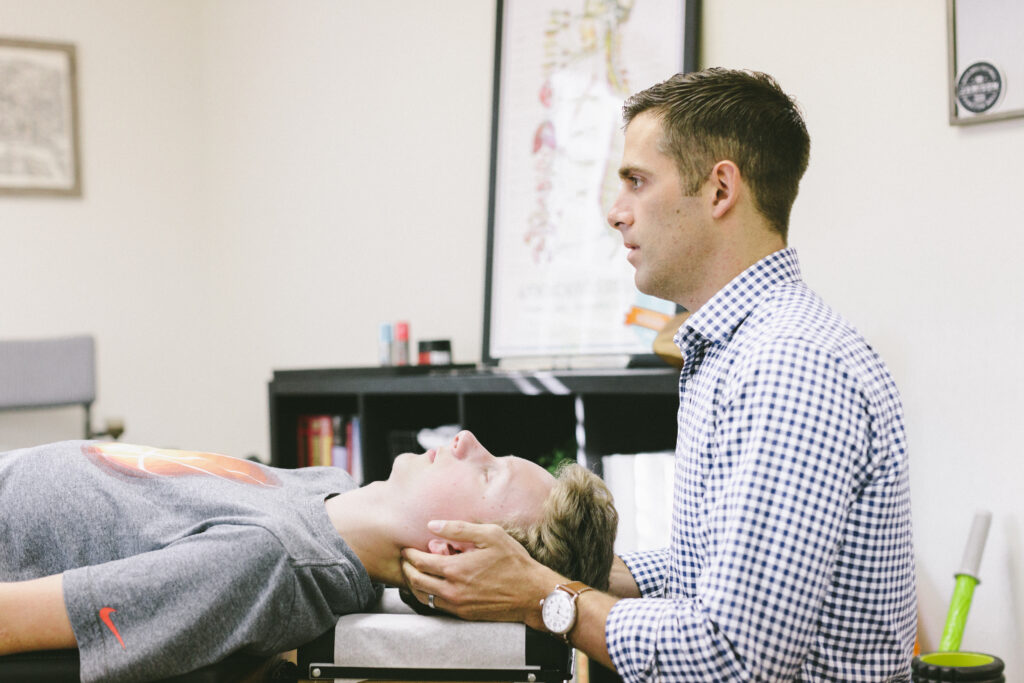
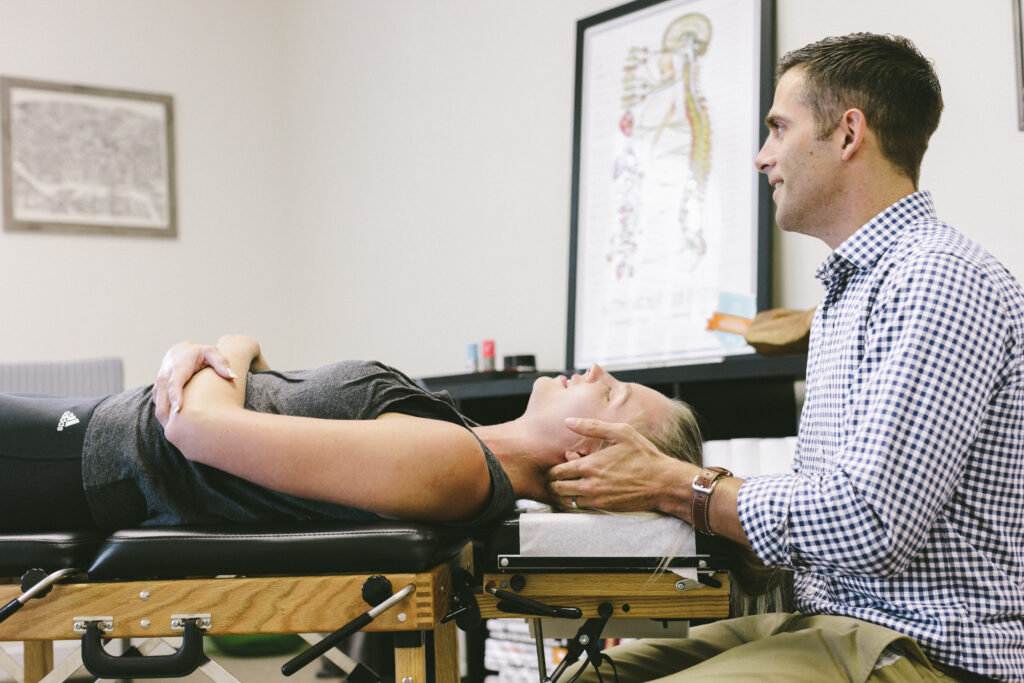
Targeted adjustments to the cervical and thoracic spine restore joint motion, reduce nerve irritation, and relieve the mechanical strain causing your headaches. Most headache patients feel a noticeable reduction in pain and tension after their first adjustment.
Dr. Drew uses multiple techniques based on your presentation — manual adjustments for joints that need direct mobilization, instrument-assisted (Activator) for patients who prefer a lighter approach, and Graston Technique for soft tissue adhesions in the neck and upper back.
3. Corrective Exercises
Adjustments get the joints moving. Exercises keep them there. Every headache patient receives exercises from the first visit, designed to:
- Correct forward head posture — strengthen the deep cervical flexors that hold your head in proper alignment over your shoulders
- Reduce muscle tension — release the suboccipital, upper trapezius, and levator scapulae muscles that are driving tension into your head
- Improve thoracic mobility — restore mobility in the mid-back to take compensatory stress off the neck
Without the exercise component, headaches tend to return once the muscles tighten back up. This is why adjustments alone often provide only temporary relief, and why our combined approach produces longer-lasting results.
Corrective Exercises for Headache Patients
These are the exercises I prescribe most frequently for headache patients. The specific combination depends on what your exam shows, but most people dealing with recurring headaches need work in three areas: strengthening what’s weak, stretching what’s tight, and mobilizing what’s stiff.
Deep Cervical Flexor Activation (Chin Tucks)
This is the single most important exercise for headache patients. The deep cervical flexors are the small muscles at the front of your neck that hold your head in proper alignment over your shoulders. In most headache patients, these muscles are weak and inhibited — they’ve essentially shut off because the superficial neck muscles have taken over. A chin tuck retrains them. You’re not just tucking your chin to your chest — you’re retracting your head straight back, like you’re making a double chin, and holding for 5-10 seconds. I have most patients start with 10 reps, 3 times a day. It looks simple but when done correctly, this one exercise directly counteracts the forward head posture that’s loading your suboccipital muscles and compressing the nerves that refer pain into your head.
Suboccipital Self-Release
The suboccipital muscles sit right at the base of your skull and are one of the primary pain generators in both cervicogenic and tension headaches. I teach patients to use two lacrosse balls taped together (or a peanut-shaped massage tool) placed at the base of the skull while lying on their back. You let gravity do the work — no aggressive pressing. Hold for 60-90 seconds and let the muscles release. Most patients feel immediate tension relief and many report that their headache intensity drops within minutes. This is a daily exercise, especially before bed if nighttime tension is an issue.
Upper Trapezius and Levator Scapulae Stretches
These two muscles are almost always overactive in headache patients. They’re compensating for weak deep neck flexors and poor thoracic posture. I prescribe targeted stretches for each — ear to shoulder for the upper trap, nose to armpit for the levator. Hold 30 seconds each side, twice daily. The key coaching point is that these stretches work best after the joints have been adjusted. If the joints are still restricted, the muscles will tighten right back up because they’re guarding the dysfunction.
Thoracic Spine Foam Rolling
Your mid-back directly affects your neck. When the thoracic spine is stiff — and it almost always is in desk workers — the cervical spine compensates by doing more than its share of movement. That overloads the neck joints and drives headaches. I have patients foam roll the thoracic spine for 2-3 minutes daily, focusing on extension over the roller. This isn’t about cracking anything — it’s about restoring mobility to a segment of the spine that’s been locked in flexion from sitting all day.
Pec Doorway Stretch
Tight pecs pull your shoulders forward and reinforce the rounded posture that drives forward head position. A simple doorway stretch — forearms on the door frame, one foot forward, leaning through until you feel a stretch across the chest — held for 30 seconds, 2-3 times daily. This one doesn’t seem like it would help headaches, but it’s a critical piece of the postural chain. You can’t hold your head in proper alignment if your chest is pulling your shoulders forward.
Scapular Wall Slides
These strengthen the lower trapezius and serratus anterior — the muscles that keep your shoulder blades down and back. When these are weak, the upper traps take over, which drives neck tension, which drives headaches. Back against a wall, arms in a “goal post” position, slide them up and down while keeping your wrists and elbows in contact with the wall. 10-15 reps, twice daily. Patients usually find these harder than expected, which tells you how weak those stabilizers have gotten.
The point of giving patients exercises from day one isn’t just about accelerating recovery — it’s about giving you ownership of the process. Adjustments get the joints moving. These exercises keep them there. When both are working together, headaches stop coming back.
“I have been to many chiropractors through the years. I have tried chiropractors in Dallas/Fort Worth, Houston, Atlanta and now Richmond. Dr. Jamison is gentle but firm enough to relieve your pain. Dr. Jamison has helped me with headaches, neck pain and an ongoing sinus infection I had for about ten months. By the third appointment my sinus issues were gone. That in itself speaks volumes. Dr. Jamison will be our family chiropractor from now on.”
— Bridgette J.
Who Comes to Us for Headaches
- Office workers and remote workers — sustained screen time, poor ergonomics, and forward head posture are the most common headache triggers we see. If your headaches get worse through the workday and better on weekends, your workstation posture is almost certainly involved.
- People relying on medication for headache management — if you’ve been taking over-the-counter or prescription medication regularly for headaches without investigating the cause, there’s likely an underlying structural issue that hasn’t been addressed.
- Migraine patients looking to reduce episode frequency — patients whose migraines are triggered or worsened by neck tension, postural strain, or cervical joint dysfunction often see a significant reduction in episode frequency.
- Pregnant women with tension headaches — hormonal changes during pregnancy can increase headache frequency. Chiropractic care is a safe, drug-free option for headache relief during pregnancy. Dr. Drew is Webster Technique certified.
- Post-accident headache sufferers — neck strain and whiplash from auto accidents frequently trigger headaches that persist for weeks or months after the crash.
Why Chiropractic Instead of Medication?
We’re not anti-medication. If you need it, take it. But medication manages the symptom. It doesn’t fix the mechanical dysfunction that’s creating the headache in the first place
Consider the pattern: the headache comes, you take a pill, it goes away, and then it comes back in a few days or a week. That cycle repeats because the structural cause — the restricted joints, the forward head posture, the muscle imbalance — is still there.
Chiropractic care breaks the cycle by treating the cause. A 2011 systematic review published in the Journal of Manipulative and Physiological Therapeutics found that spinal manipulation is effective for cervicogenic headaches and tension-type headaches, with improvements in headache frequency, duration, and intensity.
For migraine patients, a 2017 review in the European Journal of Neurology found that chiropractic spinal manipulation reduced migraine frequency and disability when cervical dysfunction was a contributing factor.
[DR. DREW] Dr. Drew — the references are: Bryans et al., 2011, JMPT (cervicogenic & tension headache); and Rist et al., 2017, EJN (migraine). Add full citations or have your SEO agency link to them.
Simple, Transparent Pricing
No insurance. No referrals. No surprise bills.
$40 per visit
Individual Membership: $120/month (unlimited visits, no contract)
Family Membership: $180/month (2+ family members, unlimited visits, no contract)
Most headache patients notice a reduction in frequency and intensity within the first 2–4 visits. Your care plan is based on what your exam shows, not what an insurance company allows.
Frequently Asked Questions – Headaches & Migraines
Yes. The majority of recurring headaches — tension headaches, cervicogenic headaches, and many migraines — have a cervical spine component. When restricted joints in the neck are mobilized and the surrounding muscles are retrained, headache frequency and intensity decrease significantly. This is supported by multiple peer-reviewed studies.
Many patients notice a reduction after the first or second visit. For most tension and cervicogenic headaches, significant improvement typically occurs within 4–8 visits. Migraines may take longer depending on the complexity of the triggers involved. We’ll give you an honest timeline at your first appointment.
Tension headaches usually feel like a band of pressure around the head and are driven by muscle tension and joint restriction in the neck and upper back. Migraines are typically one-sided, more intense, and may include nausea, light sensitivity, or visual disturbances (aura). Both can have cervical spine dysfunction as a contributing cause, which is why chiropractic care can help with each.
A cervicogenic headache originates from dysfunction in the cervical spine — restricted joints, irritated nerves, or muscular strain in the upper neck. The pain is referred into the head, often behind one eye or at the base of the skull. It’s commonly misdiagnosed as a tension headache or migraine. Chiropractic adjustments are the most effective treatment for cervicogenic headaches.
Absolutely. Forward head posture puts constant strain on the muscles and nerves at the base of the skull. This is one of the most common causes of recurring tension headaches, especially in people who work at desks. Correcting posture through adjustments and exercises often reduces headache frequency more than any other single intervention.
Yes. Cervical adjustments performed by a licensed chiropractor are safe and well-researched. Dr. Drew uses the technique most appropriate for your condition, including low-force options for patients who are nervous or have more sensitive presentations. A thorough evaluation is always performed before any treatment.
That’s a decision between you and your prescribing doctor. We don’t advise patients to stop medication. What typically happens is that as the structural cause of the headaches is corrected, patients find they need medication less frequently on their own. The goal is to address the root cause so you’re not dependent on medication for relief.
No. Chronic headaches often respond well to chiropractic care, even when patients have been suffering for years. The underlying joint restrictions and postural patterns are still treatable regardless of how long they’ve been present. It may take a few more visits than an acute case, but we see consistent improvement in chronic headache patients.
Have more questions? Send us a message➜
Book an Appointment
Jamison Family Chiropractic
Address: Village Square • 9019 Forest Hill Ave, Suite 2B • Bon Air / Richmond, VA 23235
Phone: 804-432-1494
Hours:
Monday 8:00 am – 12:00 pm, 2:00 pm – 6:00 pm
Tuesday 2:00 pm – 6:00 pm
Wednesday 8:00 am – 12:00 pm & 2:30 pm – 6:00 pm
Thursday 8:00 am – 12:30 pm & 2:30 pm – 5:00 pm
Friday 8:00 am – 12:00 pm
If headaches are interfering with your work, sleep, or daily life, we’d like to help you find the cause and fix it. Same-day appointments are often available.